WLTH Pay
Designing a payments platform where the infrastructure complexity never reaches the user.
Designed the end-to-end UX architecture for a payments platform built on Airwallex infrastructure. The work covered system mapping, mental model definition, and interaction design across single, scheduled, and batch payment flows.
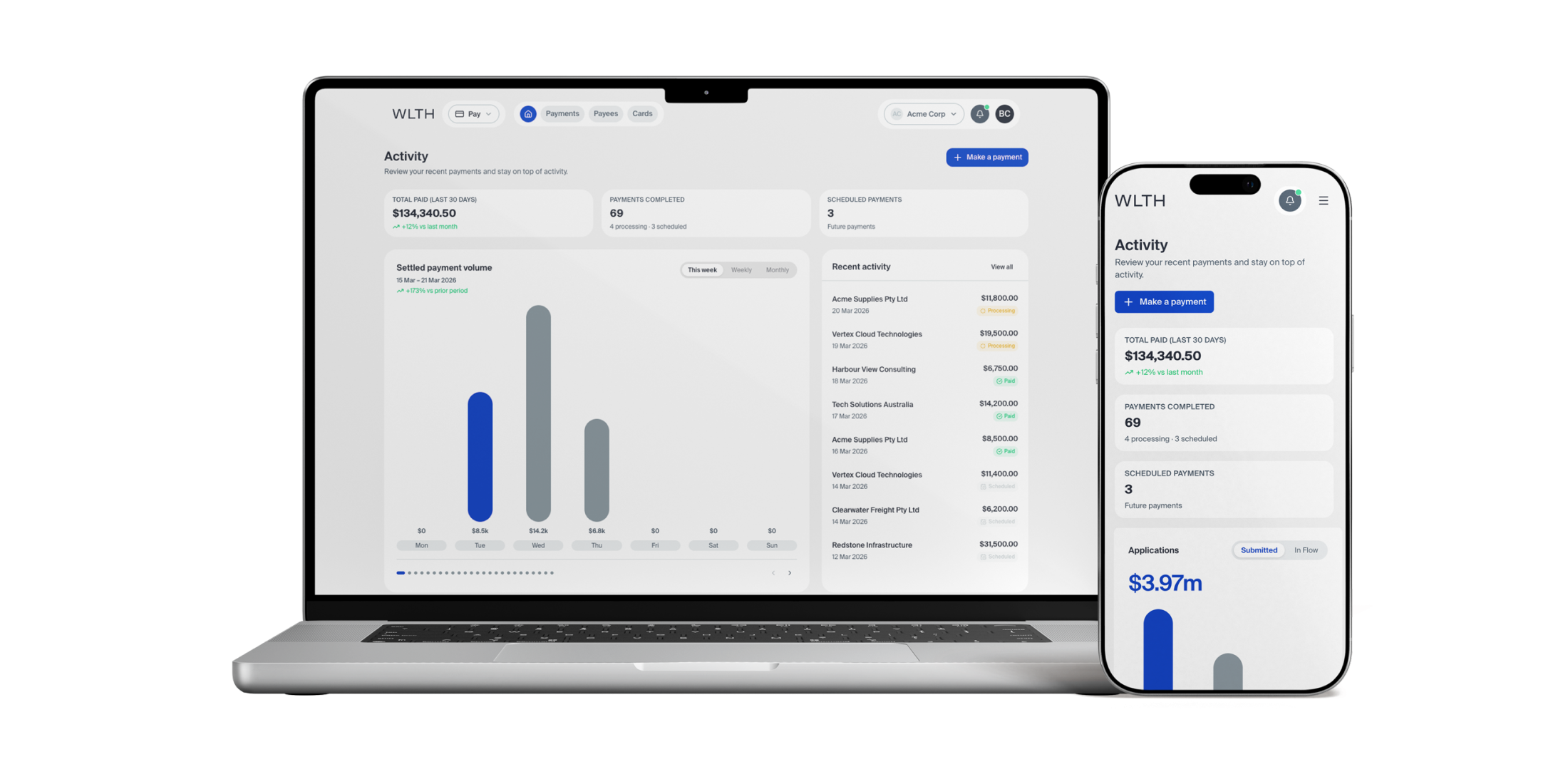
WLTH Pay handles individual, batch, and scheduled payments on Airwallex financial infrastructure. Irreversible transactions, regulatory constraints, real payment rails. The challenge was not designing a payment form — it was designing a system where the complexity of the infrastructure never becomes the user's problem.
Before opening Figma, I mapped the full payment lifecycle in FigJam — payee creation, funding, confirmation, failure, recovery. That pass exposed the real problem: early assumptions were treating infrastructure concepts (wallets, settlement states, funding sources) as UX concepts. Resolving the system model and the user model together first meant the design was grounded in what the infrastructure could actually do, not what we assumed.
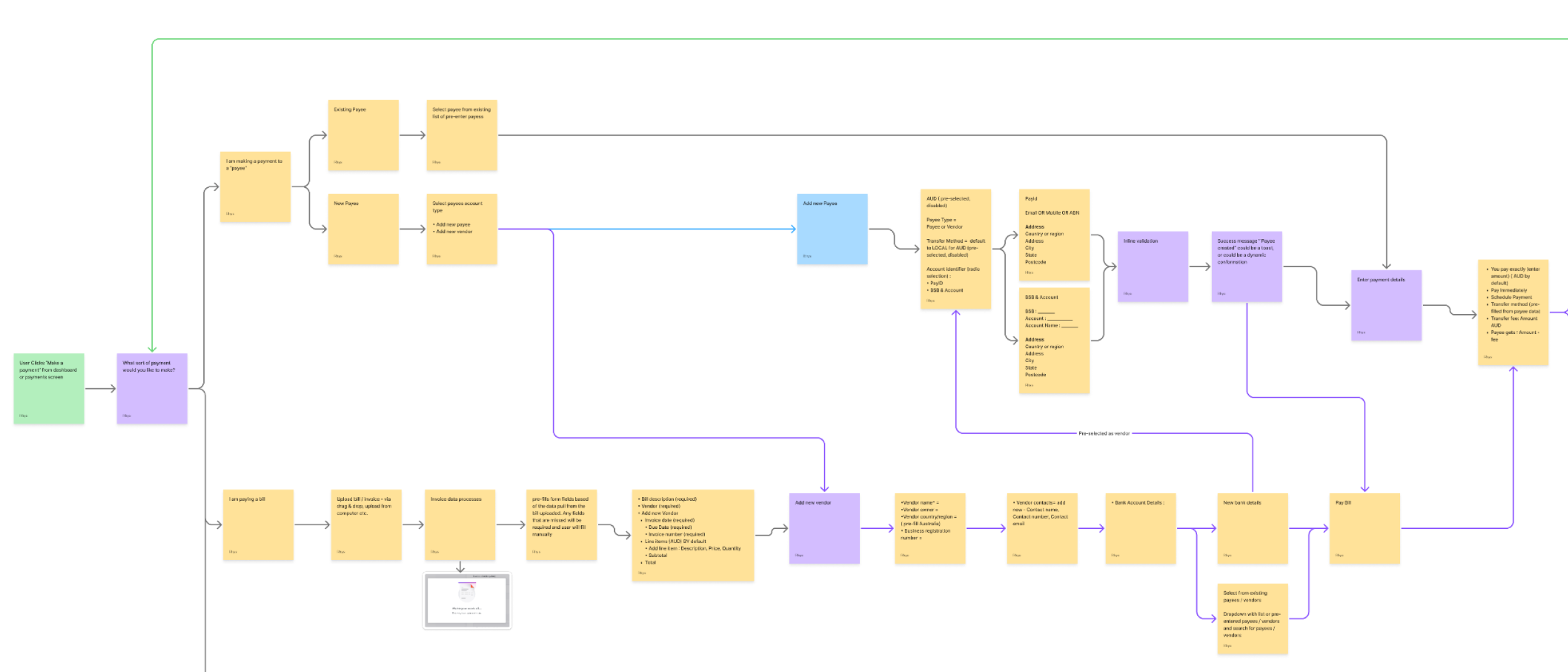
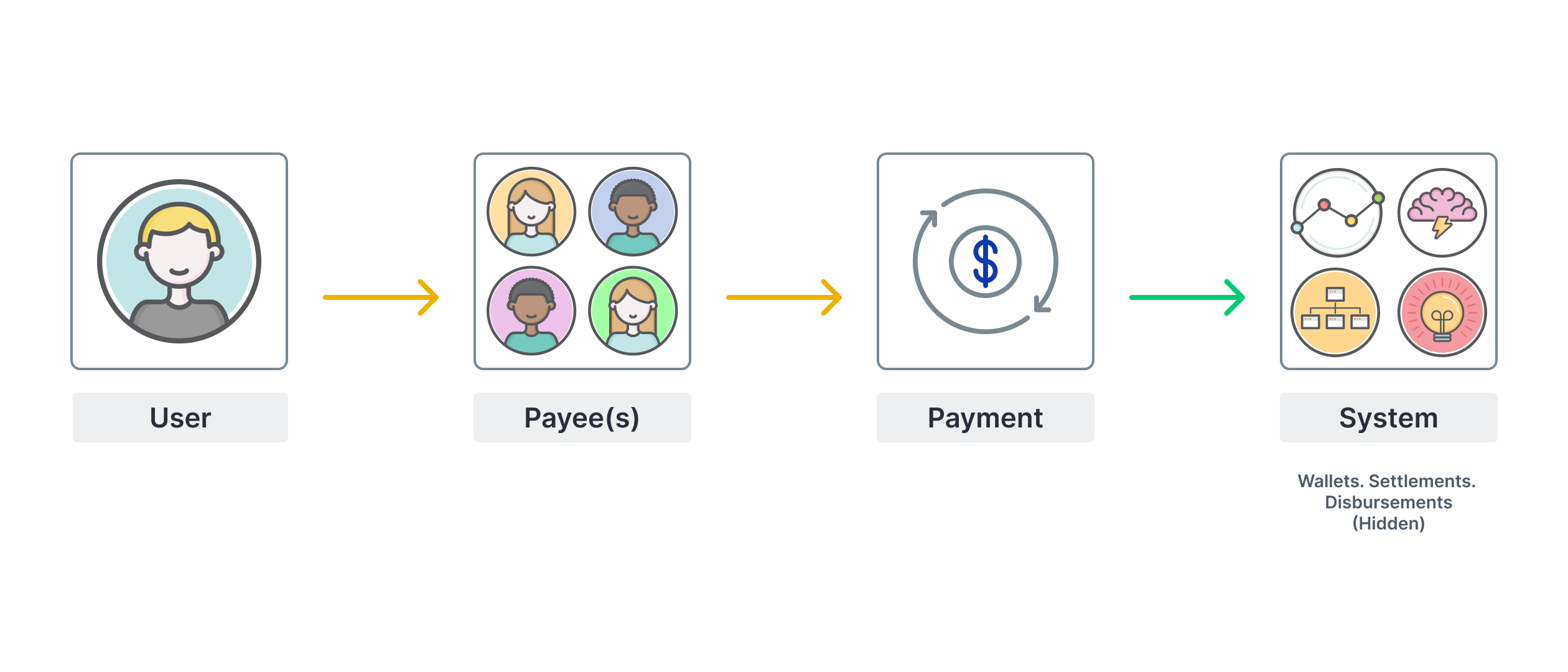
One guiding principle: complexity belongs in the system, not the interface. Three distinct payment types — individual, batch, scheduled — unified under a single interaction pattern rather than treated as separate products. Same review-first structure, same validation model, same error handling. Scale without new cognitive load.
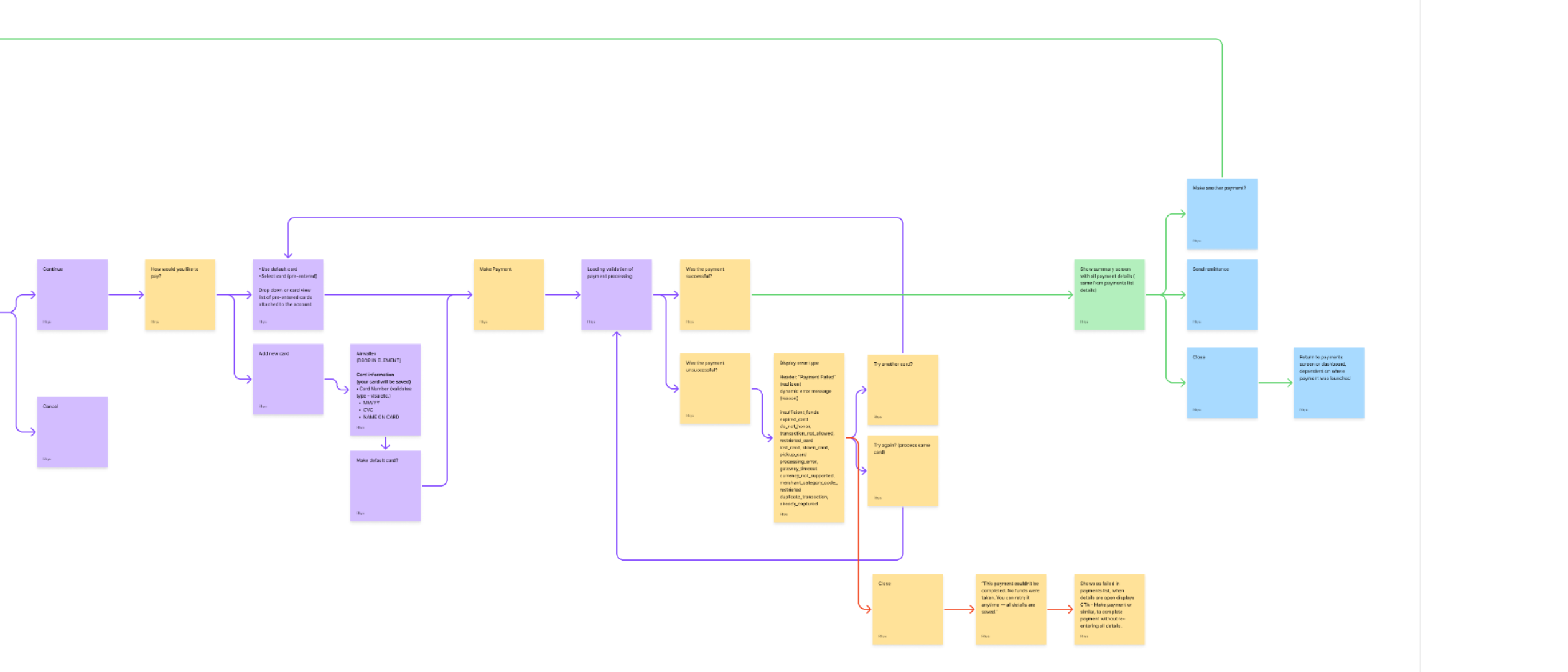
Three payment types shipped under a single mental model. The first payment flows reached engineering with fewer mid-build design corrections than any prior WLTH product surface — a direct consequence of resolving system and user models before interface work began, not after.
What I'd do differently: align on the API model on day one. We lost time to assumptions about what the infrastructure could support. In financial software, system model and user model need to be resolved together — treating them as sequential phases is where complexity leaks through.